
-
Natural Indigo Extract
Produttore:themaziPrezzo di listino Da $20.00 USDPrezzo di listino

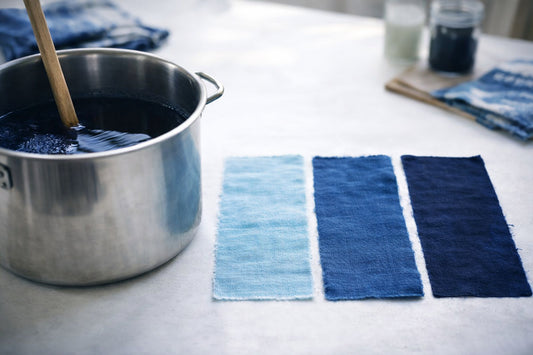
Indigo-bearing plants are the source of a true, lasting natural blue, which is why indigo has been prized by dyers around the world. Our natural indigo extract is a plant-based blue dye for fabric and yarn, giving a full range of blues from pale sky to deep navy on cotton, linen, wool and silk. For a complete vat, see our natural indigo collection with fructose.
Blue, green and purple
Blue is the key to the rest of the natural palette: overdye with yellow dyes for greens and with red dyes for purples and violets.
Caring for indigo-dyed textiles
Rinse well after dyeing, wash separately at first, and dry out of direct sun. Indigo has excellent wash fastness and softens beautifully with wear.
Frequently asked questions
Is there a natural blue dye other than indigo?
Indigo-bearing plants are the main source of a fast natural blue; other plant blues fade quickly.
Can I get light blue?
Yes. Use one or two short dips in the vat for pale shades.
Does natural blue dye need a mordant?
No. Indigo bonds by oxidation in the air, so no mordant is needed.
Explore more: Natural Indigo · All Natural Dyes
Guides for this collection
-

Indigo Vat Guide: How to Dye with Natural Indig...
How indigo dyeing works, how to build a fructose or hydrosulfite vat, and three recipes for sky blue, classic indigo and deep navy.
Indigo Vat Guide: How to Dye with Natural Indig...
How indigo dyeing works, how to build a fructose or hydrosulfite vat, and three recipes for sky blue, classic indigo and deep navy.
-

Hydrosulfite Indigo Vat Recipe by Elisabeth Cul...
A reliable, beginner-friendly 10-liter hydrosulfite indigo vat recipe by natural dyer Elisabeth Culshaw.
Hydrosulfite Indigo Vat Recipe by Elisabeth Cul...
A reliable, beginner-friendly 10-liter hydrosulfite indigo vat recipe by natural dyer Elisabeth Culshaw.
-

Natural Tie-Dye: How to Tie-Dye with Plant Dyes
How to tie-dye clothes naturally with plant dyes, with a simple step-by-step onion skin method.
Natural Tie-Dye: How to Tie-Dye with Plant Dyes
How to tie-dye clothes naturally with plant dyes, with a simple step-by-step onion skin method.


