Safflower Petals
Safflower Petals
Couldn't load pickup availability
- Secure Checkout
- Fast Worldwide Shipping
- Free Shipping $150+
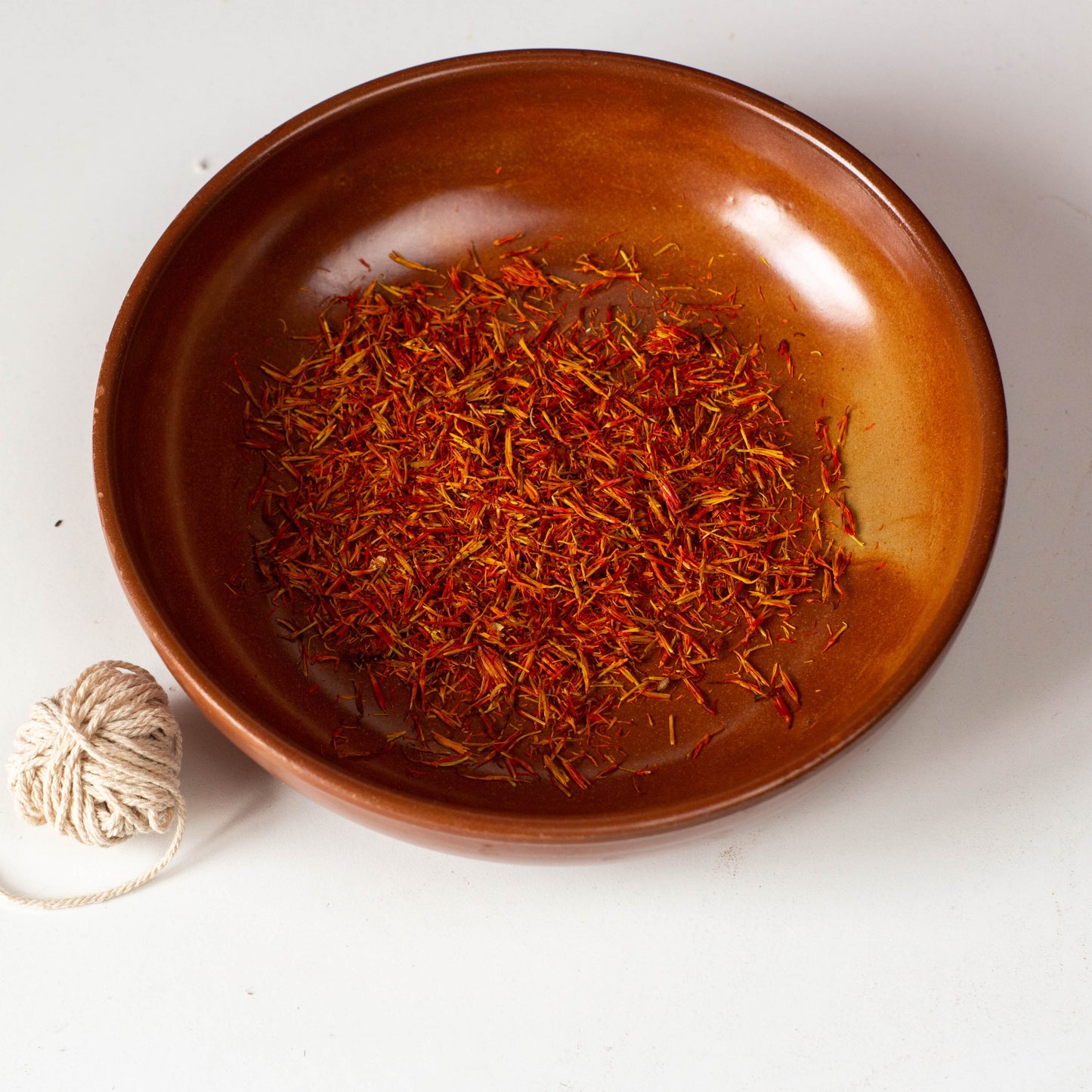
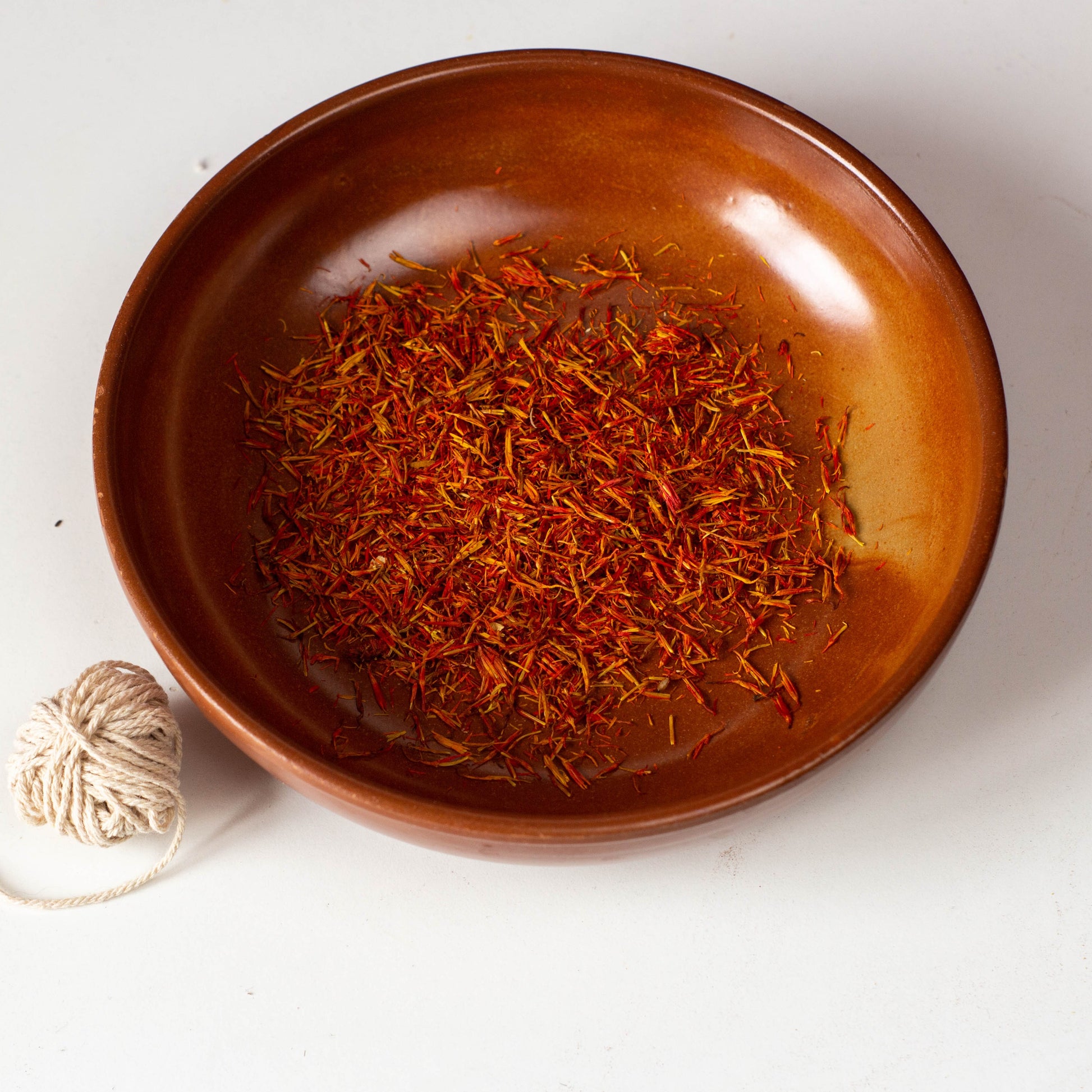
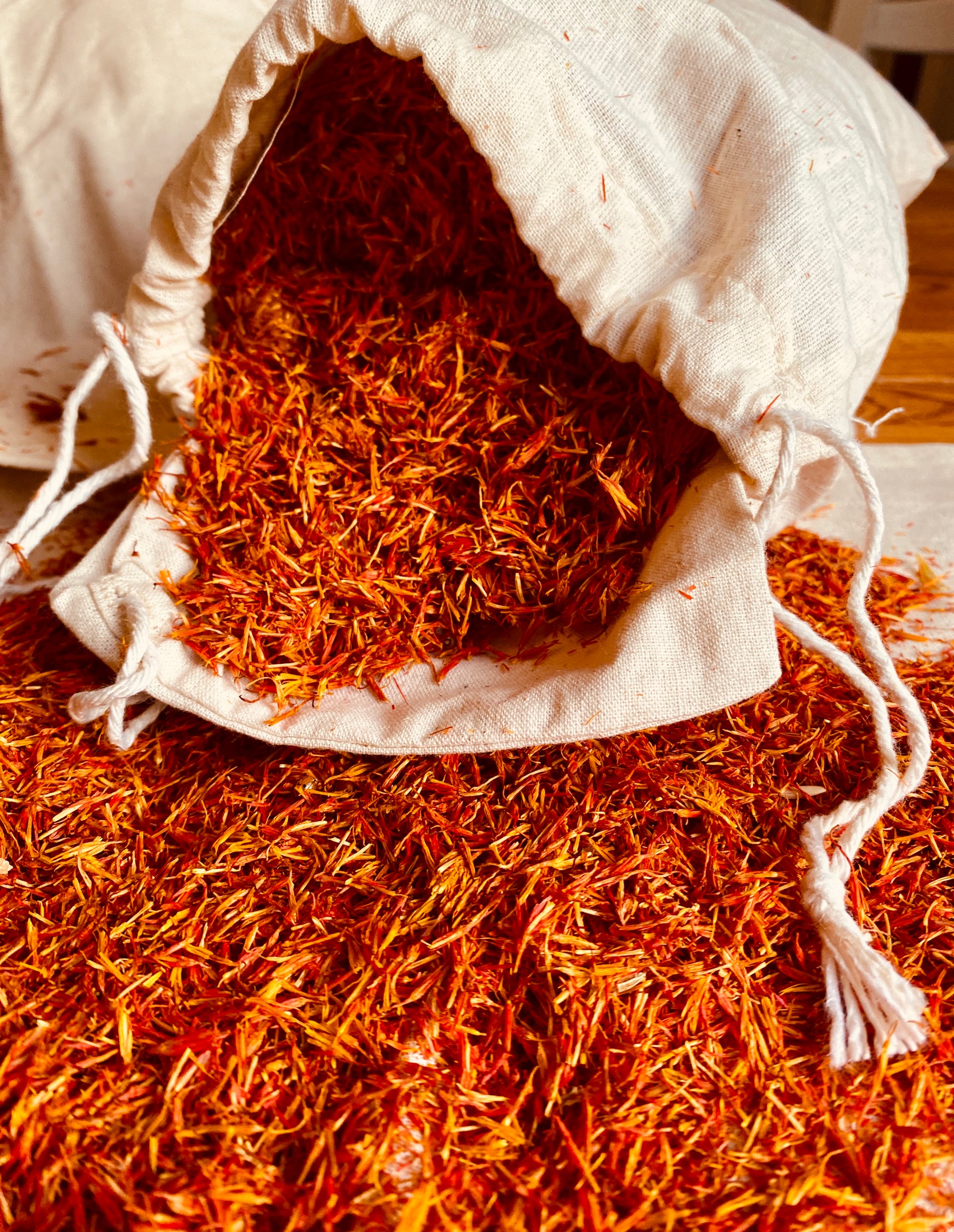
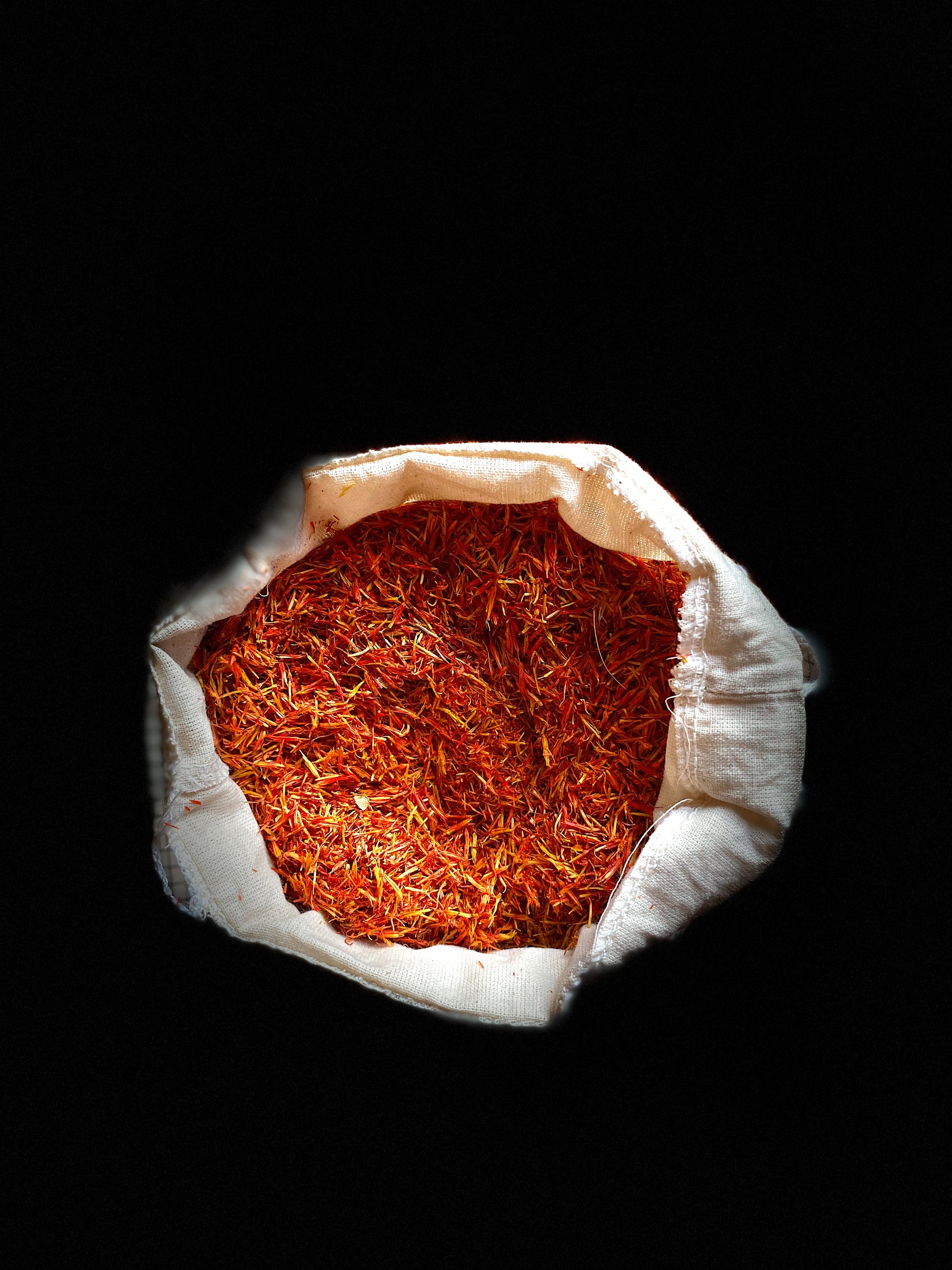
Safflower petals (Carthamus tinctorius) are a classic natural dye for vibrant yellow and pink, plus orange/coral tones and even reds, depending on the method and fibers used. Safflower is a thistle-like plant with yellow flowers, cultivated mainly for vegetable oil from its seeds, and it grows well in dry areas.
Historical use of safflower
Safflower is one of the earliest known dyestuffs, with evidence of its use in textiles from ancient Egypt more than 1900 years BCE. It has been a crop in Mesopotamia since 2500 BCE. Burnt flowers were used in ancient Egyptian cosmetics and dried flowers were hung in the tombs of the pharaohs. It was introduced into China 2000 years BCE and is still used in traditional Chinese medicine today. For hundreds of years it has been used as a substitute for saffron, as its perfume and flavor are very similar.
How to dye with safflower petals
Make sure your fiber or fabric has been properly scoured before use. For pink colors mordanting is not required, but it is recommended for increasing the light-fastness of yellow tones.
Yellow and pink from safflower
- Use at least 100 g of dried safflower petals to dye approximately 100 g of fiber.
- Place the petals in a muslin bag or a very fine sieve. Cover with cold water and leave for at least an hour, agitating occasionally.
- Drain off the yellow liquid and reserve it, squeezing or pressing the petals as much as possible. Repeat, adding the yellow liquid to your reserved batch. Repeat again if the liquid still looks a strong yellow.
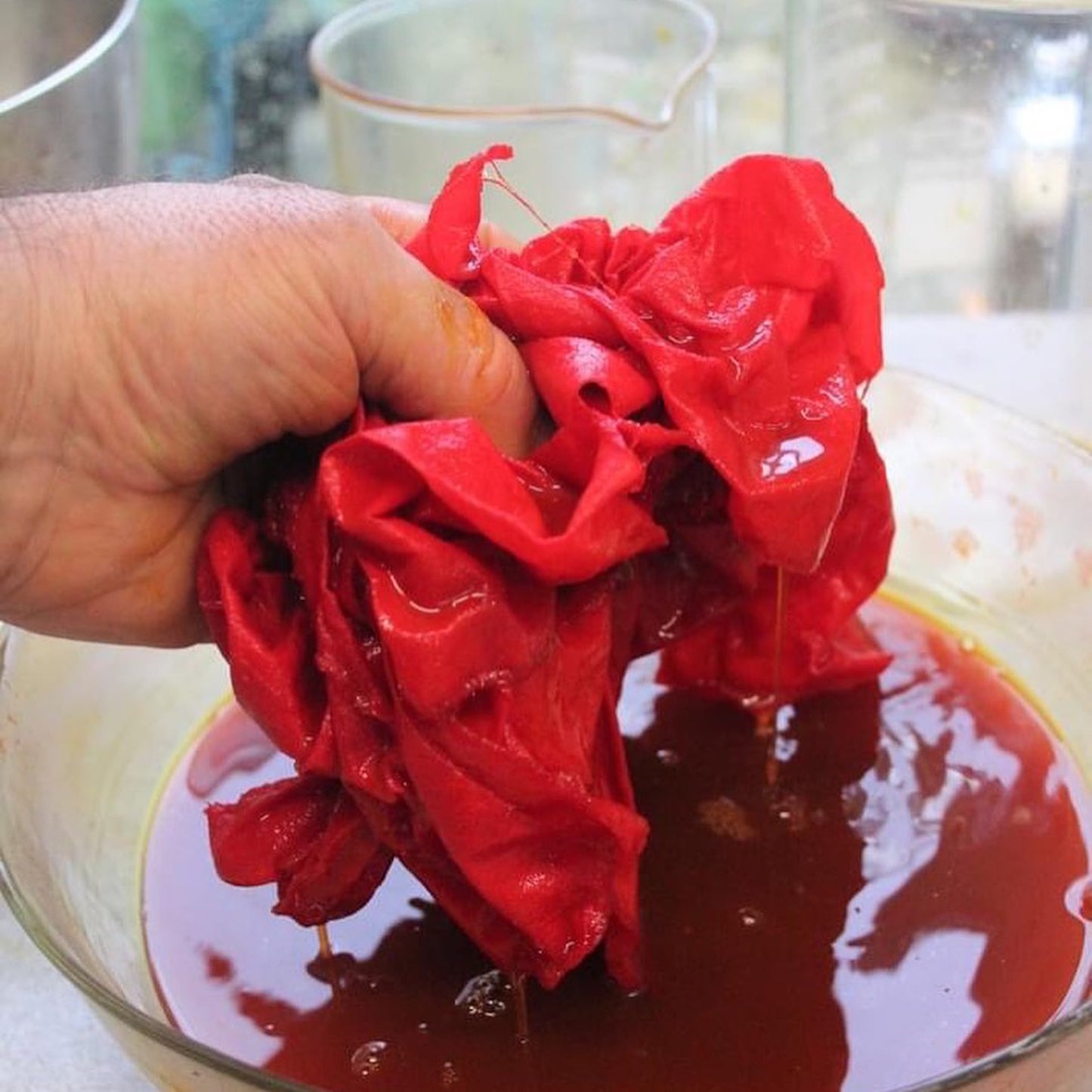
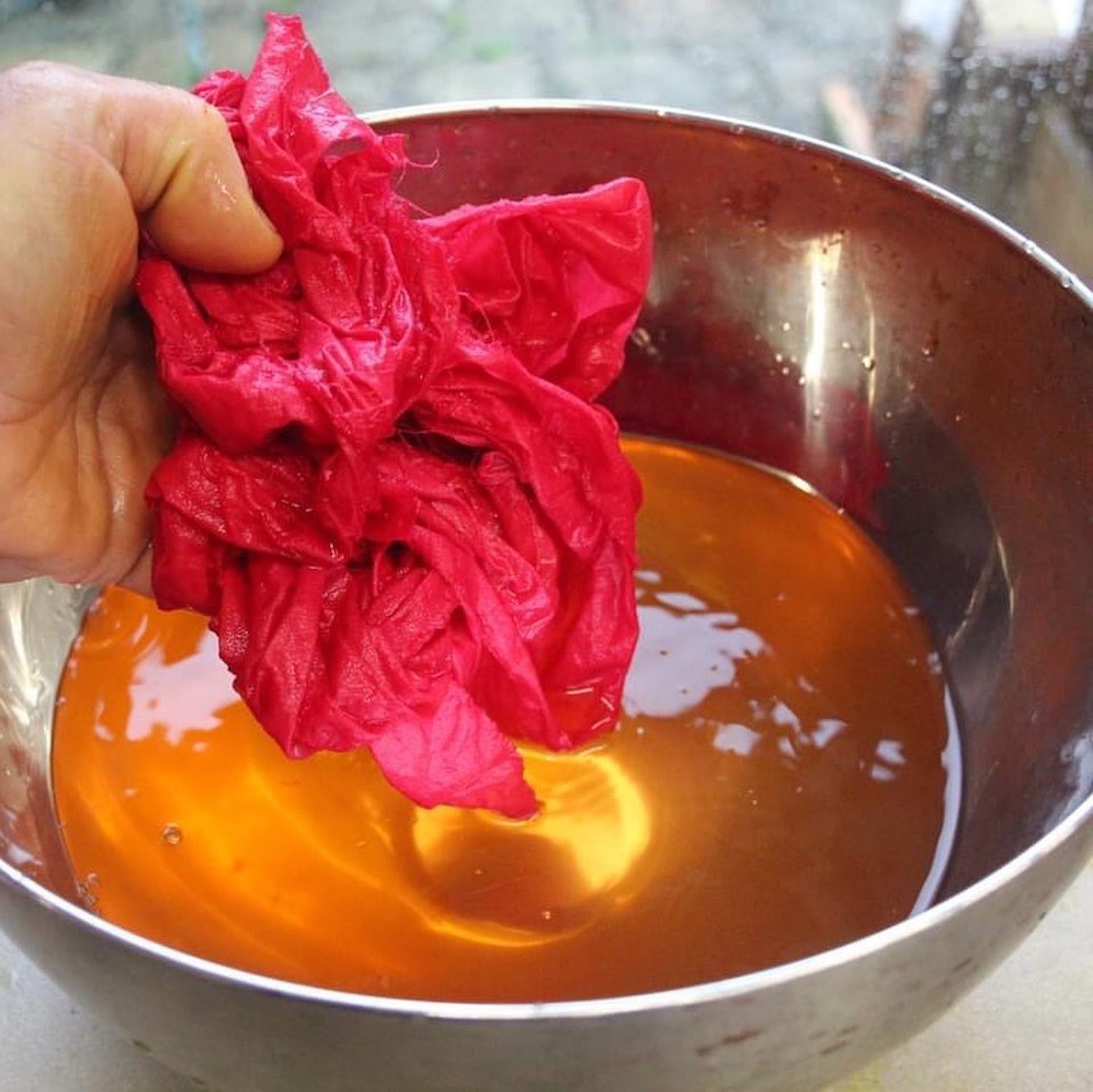
- Bring the reserved yellow liquid to the boil and simmer for 45 minutes to an hour. Add mordanted fabric or fiber, simmer a further 45 minutes and leave to cool. Leave overnight for stronger colors. An iron sulphate modifier after dyeing gives mustard and olive greens.
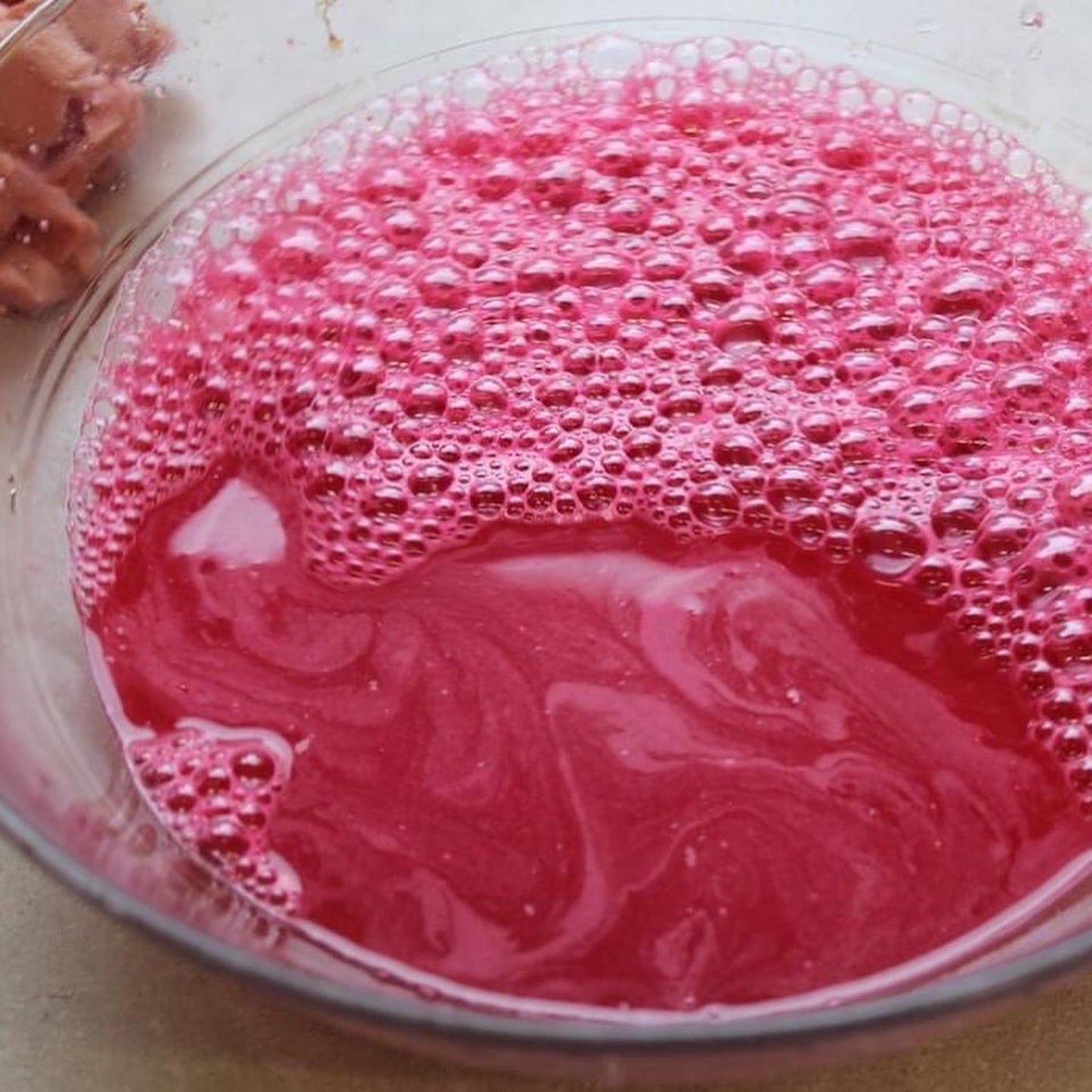
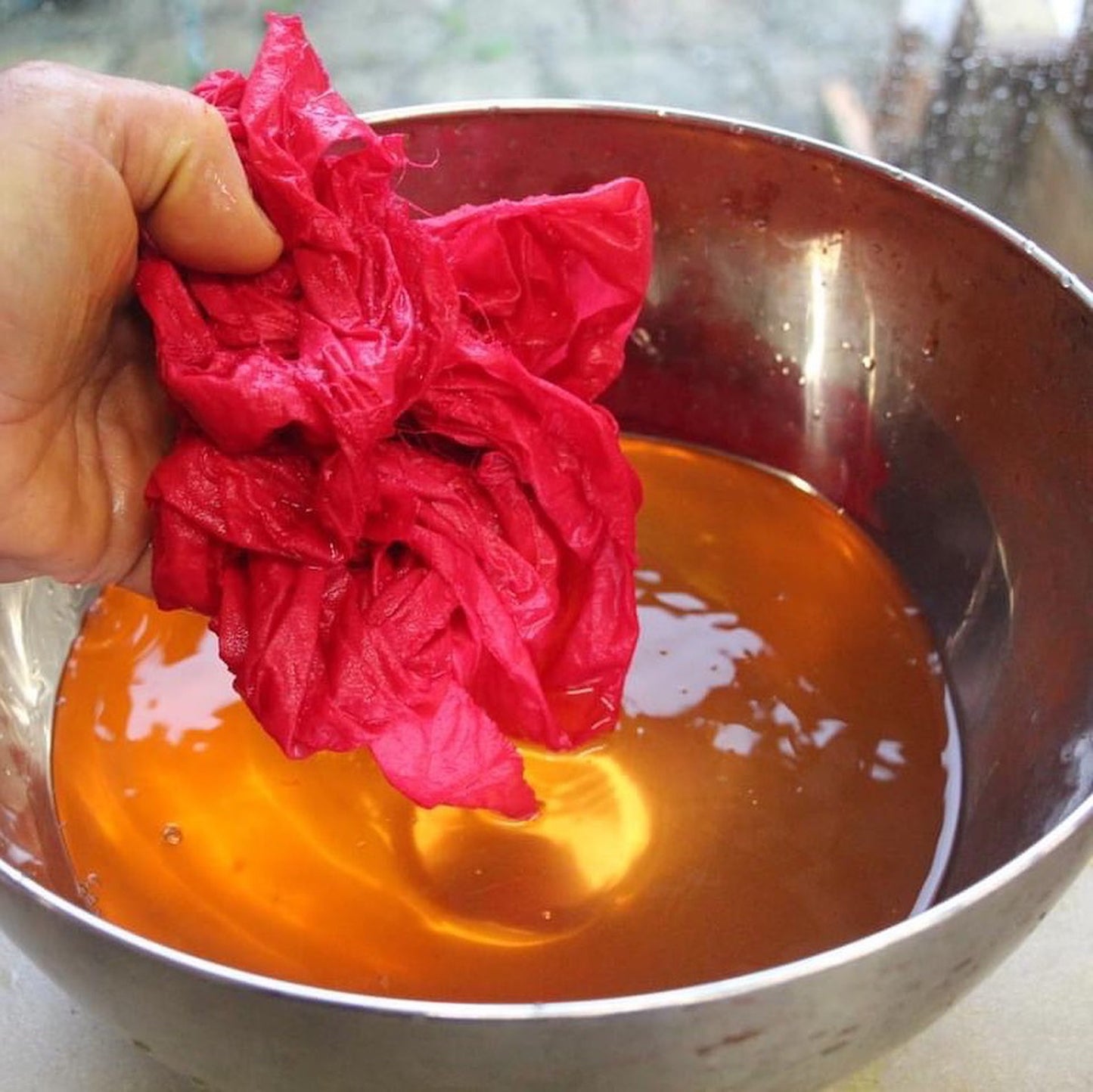
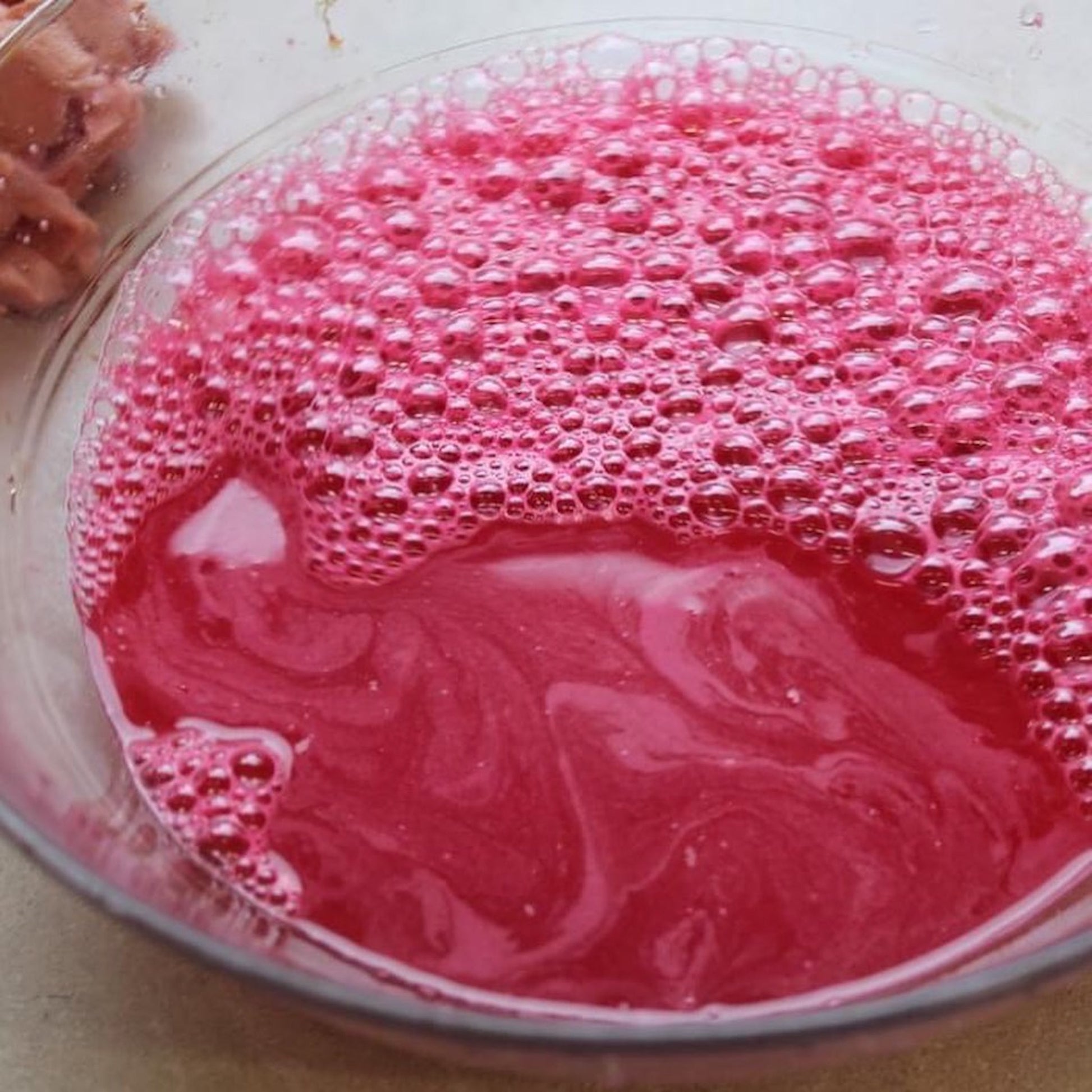
- Soak the petals further in cold water, discarding the water each time, until very little yellow is extracted. Then add a few litres of water modified to pH 11 with soda ash. Check the pH carefully, as making the solution too alkaline will spoil the process. Leave to infuse for a few hours, agitating occasionally. The liquid will gradually turn orange/brown.
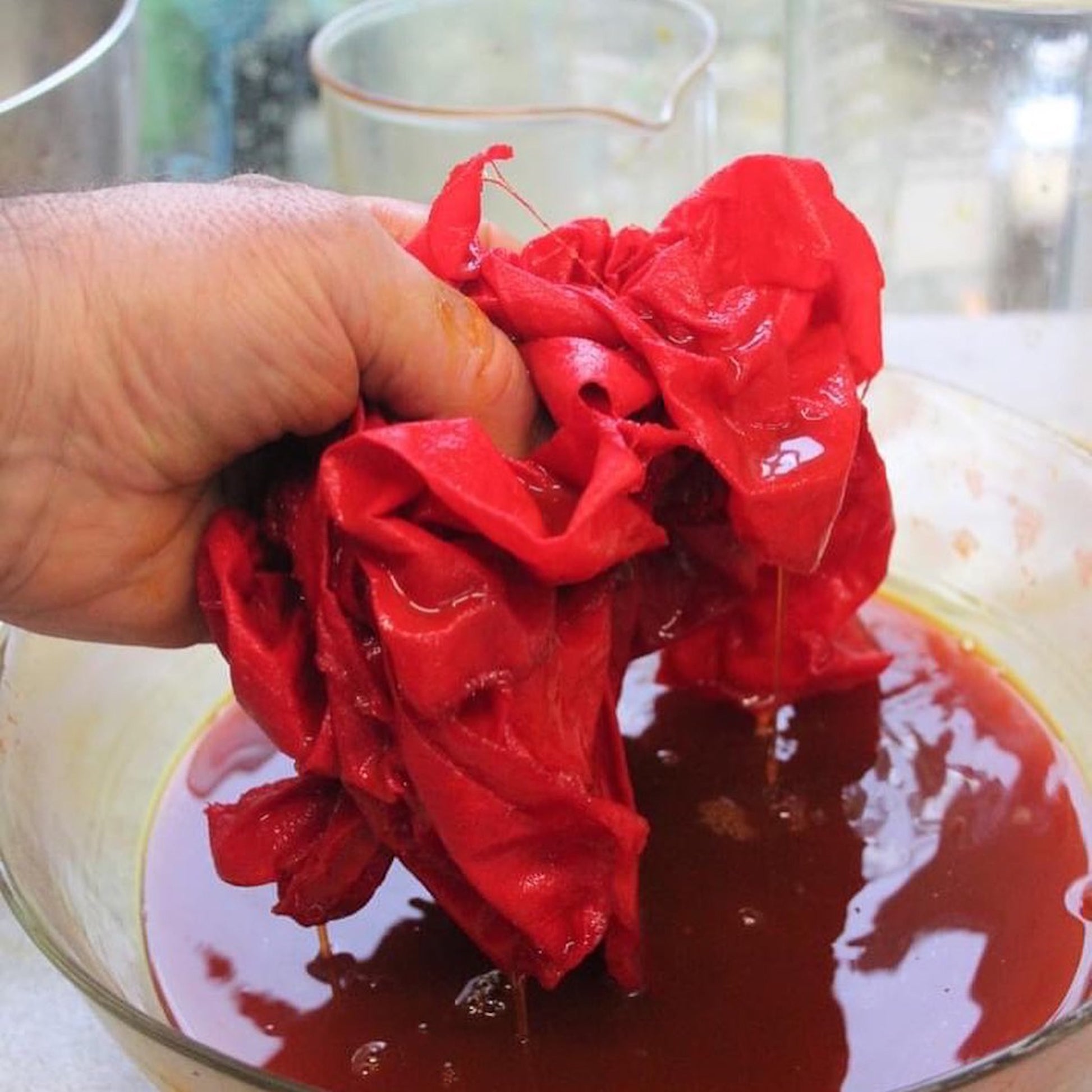
- Remove the petals and reduce the pH of the dyebath to pH 6 using clear vinegar or lemon juice. It will turn a reddish color. Add unmordanted cellulose fibers and/or silk and leave to soak overnight. Do not heat the dyebath. Cellulose fibers take on pink colors and silk turns orange/coral.
Yellow only
If you only want yellow, simmer the petals in water for 45 minutes and strain. Add fiber or fabric, simmer for 45 minutes and leave to cool, overnight for stronger colors. An iron sulphate modifier after dyeing gives mustard and olive greens.
Buying safflower in bulk
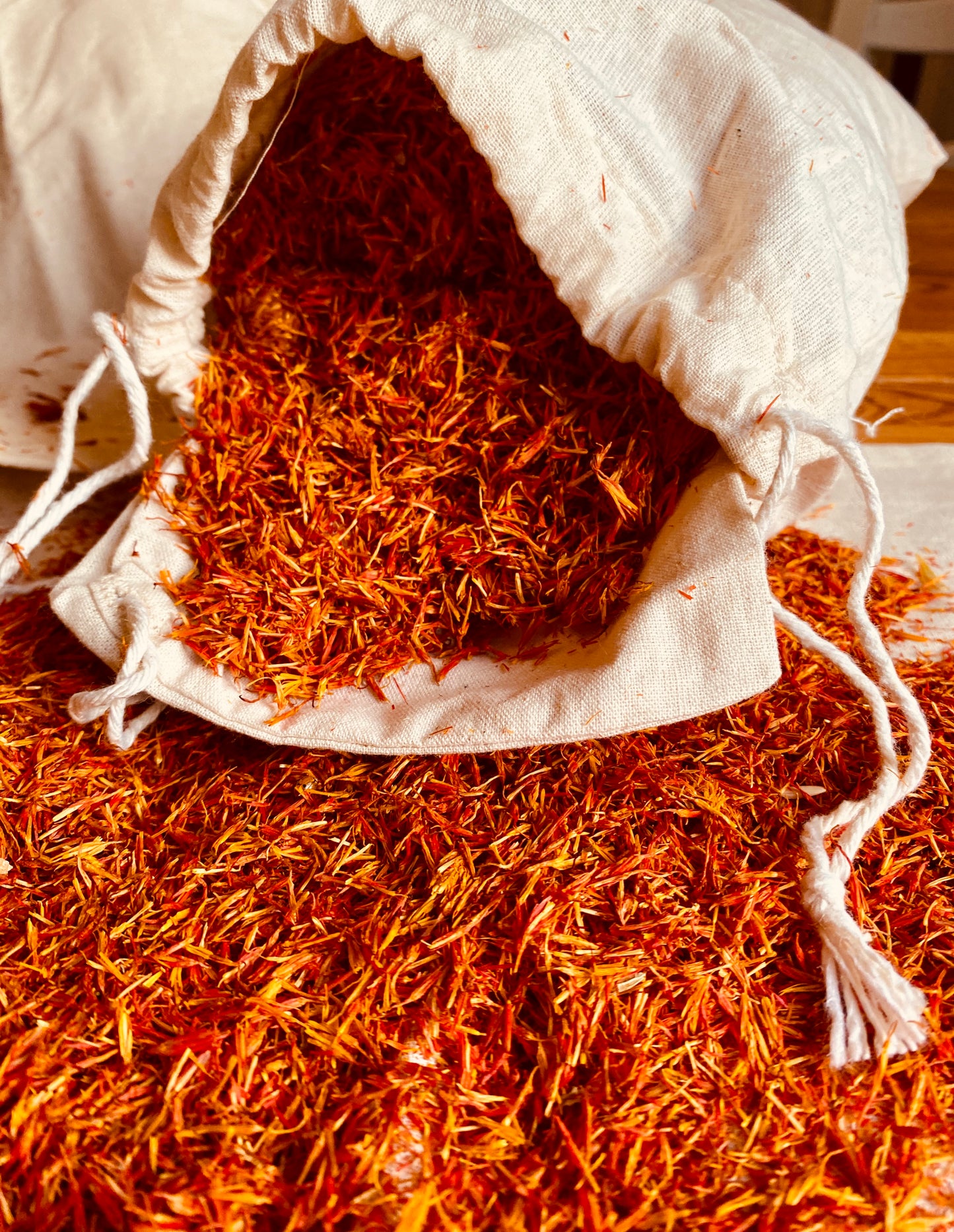
We sell dried safflower petals in small quantities as shown on our website, and we also sell bulk quantities wholesale. Every order over 50 kg is considered wholesale and receives discounted prices. To enquire, please contact us.
Work out exact grams for your fabric with our free natural dye calculator and WOF chart.
Share