
-
Iron (Ferrous Sulphate)
Vendor:themaziRegular price $5.00 USDRegular price -
Alum Mordant
Vendor:themaziRegular price From $7.90 USDRegular price -
Cellulose Mordant Studio Kit
Vendor:themaziRegular price $72.90 USDRegular price$80.20 USDSale price $72.90 USDSale


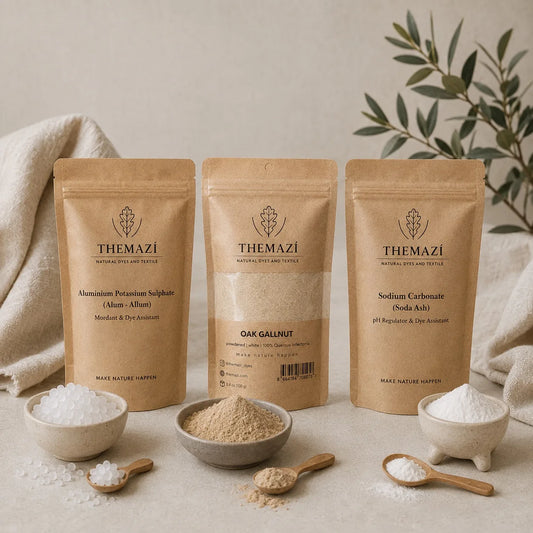
Alum and iron are the two essential metal mordants in natural dyeing and eco printing. Potassium alum keeps colors clear and bright on wool, silk, cotton and linen. Iron (ferrous sulphate) is used in small amounts to "sadden" colors: yellows turn olive, reds turn plum and tannins turn grey or black. The cellulose mordant studio kit bundles the steps for plant fibers.
How to mordant with alum
Weigh your dry fiber, dissolve alum (typically 10–15% of fiber weight for wool, often with cream of tartar) in hot water, add the wet fiber and heat gently for about an hour. For cotton and linen, apply a tannin first, then alum.
Using iron as a modifier
Add iron after dyeing in a separate, weak bath, at 1–2% of fiber weight. In eco printing, a light iron blanket or dip makes leaf prints darker and sharper. Too much iron can make wool harsh, so start low and rinse well.
Frequently asked questions
Can I use alum and iron together?
Yes. Alum is the base mordant, and iron is used afterwards as a modifier to darken and deepen color.
Is iron safe for wool and silk?
In small amounts, yes. Keep the bath weak and the time short to protect protein fibers.
Which alum is best for cotton?
Potassium alum works well after a tannin bath. The cellulose mordant kit gives you a tested method for cotton and linen.
Explore more: All Mordants & Assists · Dye Assists & Modifiers