
-
Iron (Ferrous Sulphate)
Vendor:themaziRegular price $5.00 USDRegular price -
Alum Mordant
Vendor:themaziRegular price From $7.90 USDRegular price -
Soda Ash (Sodium Carbonate)
Vendor:themaziRegular price From $5.00 USDRegular price -
Gum Arabic Powder
Vendor:themaziRegular price From $6.00 USDRegular price -
Calcium Carbonate
Vendor:themaziRegular price From $5.00 USDRegular price -
Fructose Powder
Vendor:themaziRegular price From $4.00 USDRegular price -
Cream of Tartar
Vendor:themaziRegular price From $9.00 USDRegular price -
Cellulose Mordant Studio Kit
Vendor:themaziRegular price $72.90 USDRegular price$80.20 USDSale price $72.90 USDSale


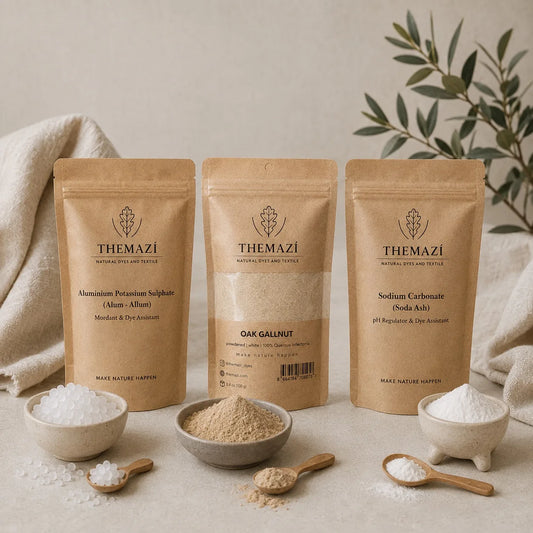
A mordant fixes natural dyes to the fiber so colors are brighter, more even and longer lasting. This collection brings together everything you need to prepare fiber and control your dye bath: alum mordant, iron (ferrous sulphate), cream of tartar, soda ash, calcium carbonate, gum arabic, fructose and the cellulose mordant studio kit.
Choosing the right mordant
- Wool and silk: alum, usually with cream of tartar.
- Cotton and linen: a tannin bath followed by alum, or the cellulose mordant kit.
- Darker, muted shades: a small amount of iron as a modifier.
Shop by type
Browse alum and iron mordants for fixing color, or dye assists and modifiers for scouring, pH control, indigo vats and printing pastes.
Frequently asked questions
Is alum safe to use?
Potassium alum is the traditional, low-toxicity mordant. Wear gloves, avoid inhaling powder and use dedicated dye pots.
How much mordant should I use?
For wool, alum is typically used at 10–15% of the dry fiber weight; for cotton, follow the tannin and alum steps in our kit instructions.
Do I always need a mordant?
Most natural dyes need one. Indigo and some tannin-rich dyes are the main exceptions.
Explore more: All Natural Dyes · Natural Dye Kits