
-
White Oak Gall Powder
Vendor:themaziRegular price From $12.00 USDRegular price$47.60 USDSale price From $12.00 USDSale -
Madder Root Powder
Vendor:themaziRegular price From $13.00 USDRegular price -
Black Walnut Hull Powder
Vendor:themaziRegular price From $11.00 USDRegular price -
Natural Indigo Extract
Vendor:themaziRegular price From $20.00 USDRegular price -
Green Oak Gall Powder
Vendor:themaziRegular price From $12.00 USDRegular price -
Iron (Ferrous Sulphate)
Vendor:themaziRegular price $5.00 USDRegular price -
Alum Mordant
Vendor:themaziRegular price From $7.90 USDRegular price -

 Sale
Acorn Tannin Extract
Vendor:themaziRegular price From $12.00 USDRegular price$17.00 USDSale price From $12.00 USDSale -
Persian Berry Powder – Ground Turkish Buckthorn
Vendor:themaziRegular price From $12.00 USDRegular price -
Red Pine Bark Tannin Extract
Vendor:themaziRegular price From $11.00 USDRegular price -
White Oak Galls (Whole)
Vendor:themaziRegular price From $11.00 USDRegular price$44.00 USDSale price From $11.00 USDSale -
Safflower Petals
Vendor:themaziRegular price From $14.00 USDRegular price -
Pomegranate Peel Powder
Vendor:themaziRegular price From $12.00 USDRegular price -
Onion Skins (Dried)
Vendor:themaziRegular price From $13.00 USDRegular price -
Weld Powder
Vendor:themaziRegular price From $12.00 USDRegular price -
Sumac Leaf Powder
Vendor:themaziRegular price From $10.00 USDRegular price -
Soda Ash (Sodium Carbonate)
Vendor:themaziRegular price From $5.00 USDRegular price -
Gum Arabic Powder
Vendor:themaziRegular price From $6.00 USDRegular price -
Green Oak Galls (Whole)
Vendor:themaziRegular price From $12.00 USDRegular price$47.60 USDSale price From $12.00 USDSale -
Madder Extract
Vendor:themaziRegular price From $35.00 USDRegular price -
Calcium Carbonate
Vendor:themaziRegular price From $5.00 USDRegular price -
Fructose Powder
Vendor:themaziRegular price From $4.00 USDRegular price -
Cream of Tartar
Vendor:themaziRegular price From $9.00 USDRegular price -
Persian Berries (Whole) – Turkish Buckthorn
Vendor:themaziRegular price From $13.00 USDRegular price$47.00 USDSale price From $13.00 USDSale

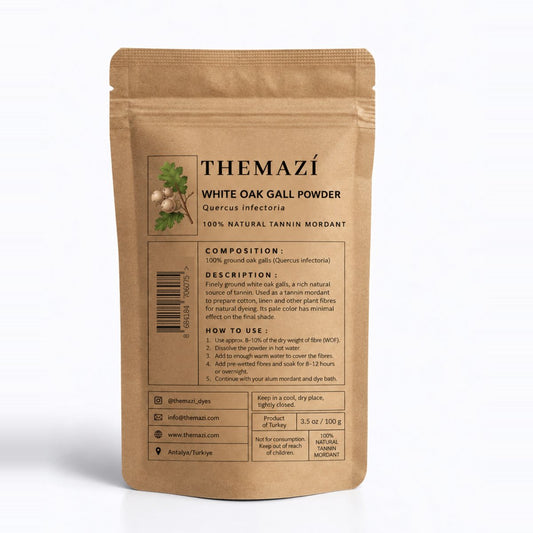


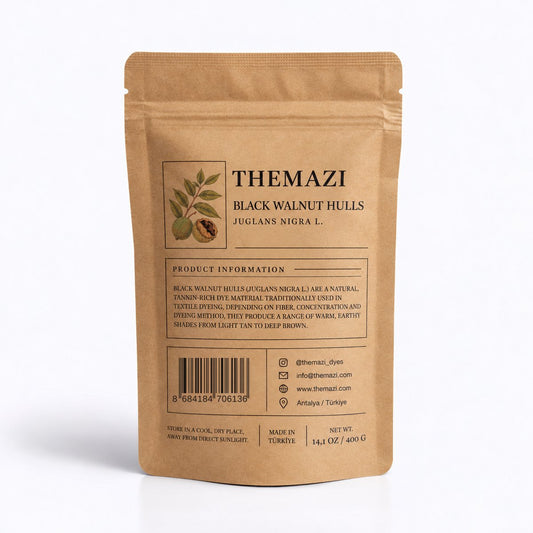


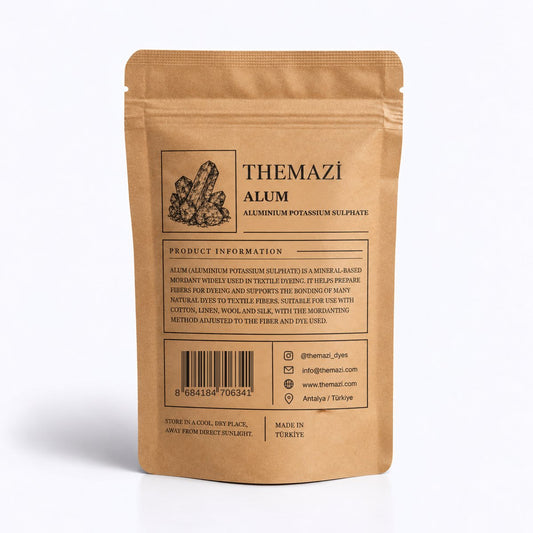


Our natural dyes for fabric are plant-based colors for dyeing cotton, linen, wool and silk, made from roots, barks, seeds, petals and fruit peels that we source and process in Turkey. Every dye in this collection works with traditional mordants, so you can build a full palette of reds, yellows, blues, browns and greys from a few reliable materials.
Natural dyes by type
- Natural dye extracts: concentrated powders for strong, repeatable color with less material.
- Raw natural dyes: whole and ground dye plants such as madder root, weld, buckthorn and pomegranate peel.
- Natural tannins: oak galls, sumac and bark tannins for mordanting plant fibers and for browns and greys.
- Natural indigo: indigo extract and fructose for a simple fruit vat.
- Natural dye kits: everything you need for a first dye bath.
Natural dyes by color
Shop red and pink dyes (madder, safflower), yellow and orange dyes (weld, buckthorn, onion skins), blue dyes (indigo) and brown and black dyes (walnut, oak gall, sumac). Overdye blue with yellow for greens, or add a little iron to deepen any shade.
How to use natural dyes
Most natural dyes need a mordant to bond with the fiber. Wool and silk are usually mordanted with alum and cream of tartar; cotton and linen take color best after a tannin bath followed by alum. Scour your fabric first, keep dye baths below a boil for bright colors, and always test on a small sample. Pair your dyes with our undyed fabrics and blanks for clean, even results.
Frequently asked questions
Are natural dyes colorfast?
Yes, when the fiber is properly scoured and mordanted. Madder, weld, indigo and tannin dyes have good light and wash fastness; wash naturally dyed items in cool water with a pH-neutral soap.
Which natural dyes are best for beginners?
Madder, weld and pomegranate peel are forgiving and give strong color. A natural dye kit is the easiest way to start, because it includes the dye, mordant and instructions.
Do you sell natural dyes wholesale?
Yes. All dyes, extracts, tannins and mordants are available in bulk from 30 kg. See our wholesale natural dyes page for terms.
Explore more: Mordants & Assists · undyed fabric by the yard · Wholesale
Guides for this collection
-

Natural Dyes: Everything You Need to Know
Our complete guide to natural dyes: what they are, natural dyes by color, how mordants work, raw dyes vs. extracts, colorfastness and how to start dyeing fabric.
Natural Dyes: Everything You Need to Know
Our complete guide to natural dyes: what they are, natural dyes by color, how mordants work, raw dyes vs. extracts, colorfastness and how to start dyeing fabric.
-

Natural Dye Color Chart: Which Plant Gives Whic...
A natural dye color chart showing which plant gives which color on which mordant, with % WOF starting rates and short notes on overdyeing for greens, purples and blacks.
Natural Dye Color Chart: Which Plant Gives Whic...
A natural dye color chart showing which plant gives which color on which mordant, with % WOF starting rates and short notes on overdyeing for greens, purples and blacks.
-

Mordants for Natural Dyeing: The Complete Guide
The complete guide to mordants for natural dyeing: alum, aluminum acetate, iron, tannins and helpers, with WOF amounts for protein and cellulose fibers.
Mordants for Natural Dyeing: The Complete Guide
The complete guide to mordants for natural dyeing: alum, aluminum acetate, iron, tannins and helpers, with WOF amounts for protein and cellulose fibers.


